
Understanding Fresh, Premium Halal Meat for Your Home & Kitchen
Halal meat is a choice rooted in religious, ethical, and quality considerations, trusted by millions worldwide. For home cooks, restaurants, or anyone looking for halal meat delivery, understanding what makes meat halal, how it is prepared, and how to choose it ensures both safety and quality.
Halal meat refers to meat slaughtered and prepared according to Islamic law. Animals must be healthy, treated humanely, and processed under strict hygiene standards. From beef, chicken, and lamb to specialty products like halal meatballs or halal steaks, knowledge about halal standards helps you make informed decisions.
What is Halal Meat and Why It Matters?
Meat Prepared According to Islamic Law
Halal meat is considered permissible for Muslims under Islamic dietary laws. Key points include:
- Only specific animals, such as cows, goats, lamb, and chickens, are allowed.
- The animal must be healthy and treated humanely before slaughter.
- Slaughter is performed by a trained professional who invokes the name of God (Allah).
This ensures the meat is safe, ethical, and compliant with religious standards.
Eating halal meat has benefits beyond religious compliance:
- Ethical handling and humane treatment of animals.
- Strict hygiene practices from slaughter to packaging.
- Confidence in hand-slaughtered, certified products, trusted by Muslim families and conscious consumers alike.
Types of Halal Meat Products
Beef Cuts and Steaks
- Ribeye, sirloin, and beef franks are popular options.
- Suitable for grilling, roasting, or home-cooked meals.
- Available for bulk purchase for restaurants or families.
Chicken Options
- Fresh or organic halal chicken, hand-slaughtered for quality.
- Ideal for meal prep, home cooking, and catering.
- Common search queries include “halal chicken near me” and “halal meat online”.
Lamb & Other Products
- Lamb cuts for roasts, stews, and curries.
- Specialty products include halal sausage and halal meatballs.
- Available in bulk orders or through delivery services.
Specialty Cuts for Restaurants & Homes
- Tailored portions for restaurants or family meals.
- Options ensure freshness, premium quality, and compliance with halal standards.
How Halal Meat is Slaughtered and Prepared
Hand-Slaughtered for Quality and Humane Practices
- Animals are treated humanely to minimize stress before slaughter.
- Only trained professionals perform hand-slaughtering, ensuring proper handling and hygiene.
- Ethical and transparent practices build trust and confidence in the product.
Standards and Certification
- Look for halal certification labels to verify compliance with Islamic law.
- Certified suppliers guarantee that meat is fresh, properly processed, and safe to consume.
Convenient Halal Meat Delivery
Order Online and Receive Fresh Meat at Home
- Many suppliers now provide halal meat delivery with temperature-controlled packaging.
- Options include halal frozen food, fresh goat meat, or specialty items like halal steak.
Maintaining Freshness During Shipping
- Meat is delivered in insulated packaging to retain quality.
- For bulk orders, some providers offer free ground shipping while maintaining freshness.
How to Shop for Halal Meat
Choosing the Right Cuts and Products
- Decide based on meals: steaks, roasts, or ground meat.
- For families or restaurants, consider bulk purchases to save time and ensure supply.
Meal Planning for Homes and Restaurants
- Mix different meats such as beef, lamb, and chicken for balanced meals.
- Consider halal meatballs or halal sausages for easy meal prep.
Halal Meat vs. Kosher Meat
Key Differences
- Halal meat follows Islamic law, while kosher meat follows Jewish dietary law.
- Both focus on ethical slaughter and hygiene, but certification and rituals differ.
Why Halal Meat is Trusted by Muslims
- Halal meat provides consistency, safety, and ethical sourcing.
- Hand-slaughtered and certified products are trusted worldwide for quality and compliance.
Customer Experience and Satisfaction
Quality Assurance and Guarantees
- Certified suppliers ensure meat is fresh, hand-slaughtered, and meets halal standards.
- Trusted suppliers provide quality guarantees and reliable delivery.
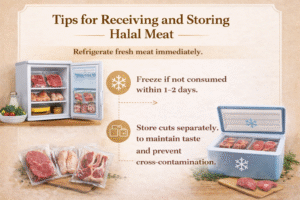
Tips for Receiving and Storing Halal Meat
- Refrigerate fresh meat immediately.
- Freeze if not consumed within 1–2 days.
- Store cuts separately to maintain taste and prevent cross-contamination.
Frequently Asked Questions
- Where can I buy certified halal chicken locally?
Certified halal chicken is available at local halal meat markets, select supermarkets, and through trusted halal meat delivery services. - How to identify certified halal meat brands in supermarkets?
Look for official halal certification labels, trusted supplier logos, and sometimes hand-slaughtered or organic claims on packaging. - What does it mean if meat is halal?
Halal meat is prepared according to Islamic law, ensuring the animal is healthy, slaughtered humanely, and free from prohibited substances. - Is Chick-fil-A halal?
Chick-fil-A does not typically offer halal-certified meat. Always check local outlets and current certification before purchasing. - Is it okay for Christians to eat halal meat?
Yes. Halal meat is safe and nutritious for anyone, following religious guidelines that emphasize hygiene and quality. - What halal food is healthy?
Fresh beef, chicken, lamb, and organic halal products are minimally processed, nutrient-rich, and ideal for healthy meals. - Where do I buy halal meat?
You can buy halal meat online, from local halal meat markets, or from certified supermarket brands.